Behavioral AI product
Mindline
AI-powered intervention for betting addiction, built around awareness instead of blocking.
The prototype moves from emotional log to AI support, so the core intervention is visible before the case study starts.
- role
- Product Designer & UX Researcher
- proof
- demo video
- result
- 6 research interviews
decision
Behavioral AI product that turns emotional triggers into real-time intervention.
proof
Designed in Figma → prototyped as a research-backed AI UX concept.
result
6 research interviews
The problem
A silent epidemic among young adults
Mobile betting creates relapse loops around emotion, social pressure, and timing. Conventional blockers are easy to bypass, so the product focuses on awareness before action.
6
In-depth interviews
18–26
Target age range
Social environments and peer pressure are the primary triggers for relapse. We need real-time intervention, not reactive restriction.
Dr. Kristen Adams, Clinical Psychologist
Research signal
Research -> insight
AI intervention
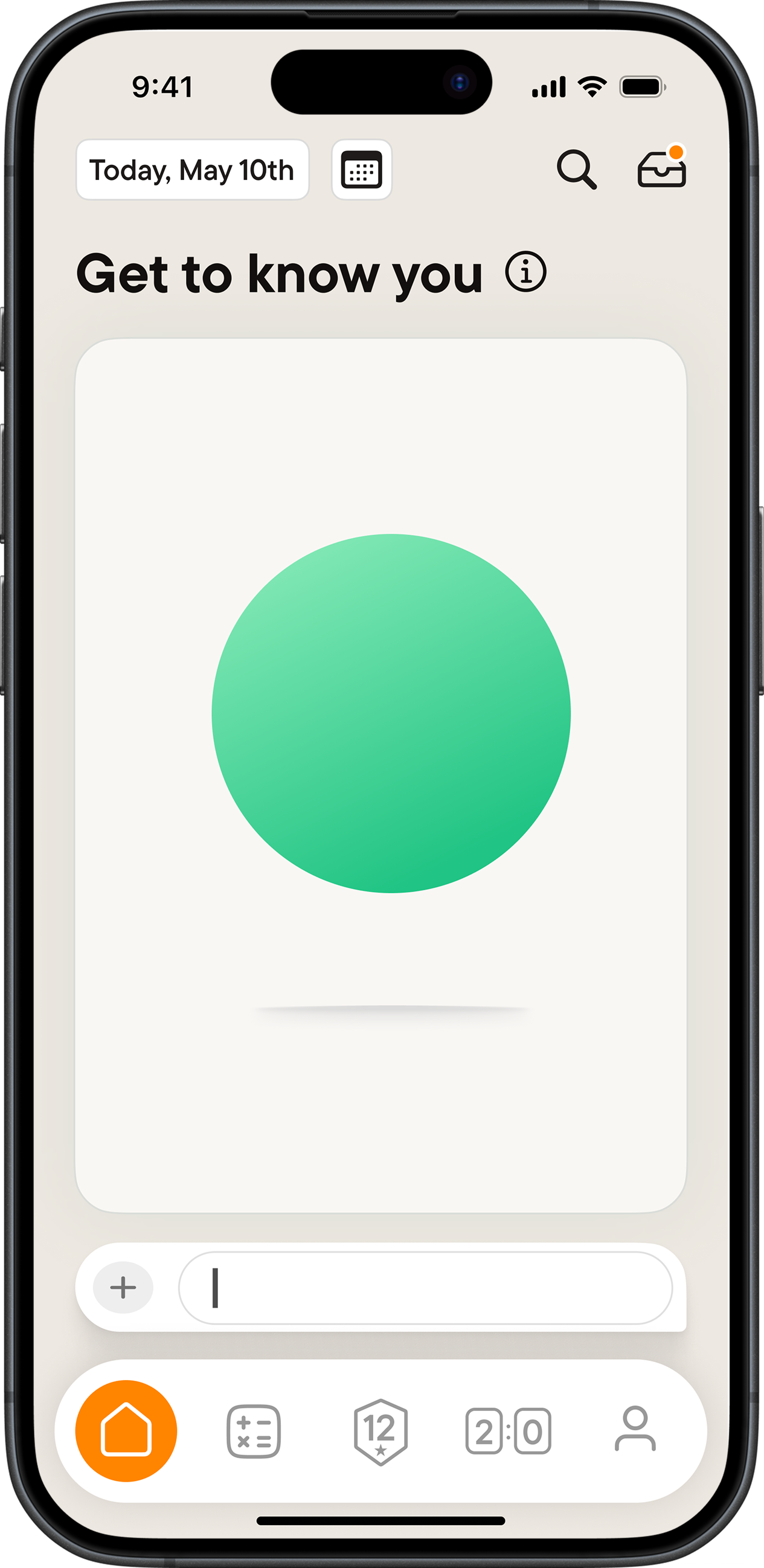
Name the state, see the risk, choose a next step
Feature 1
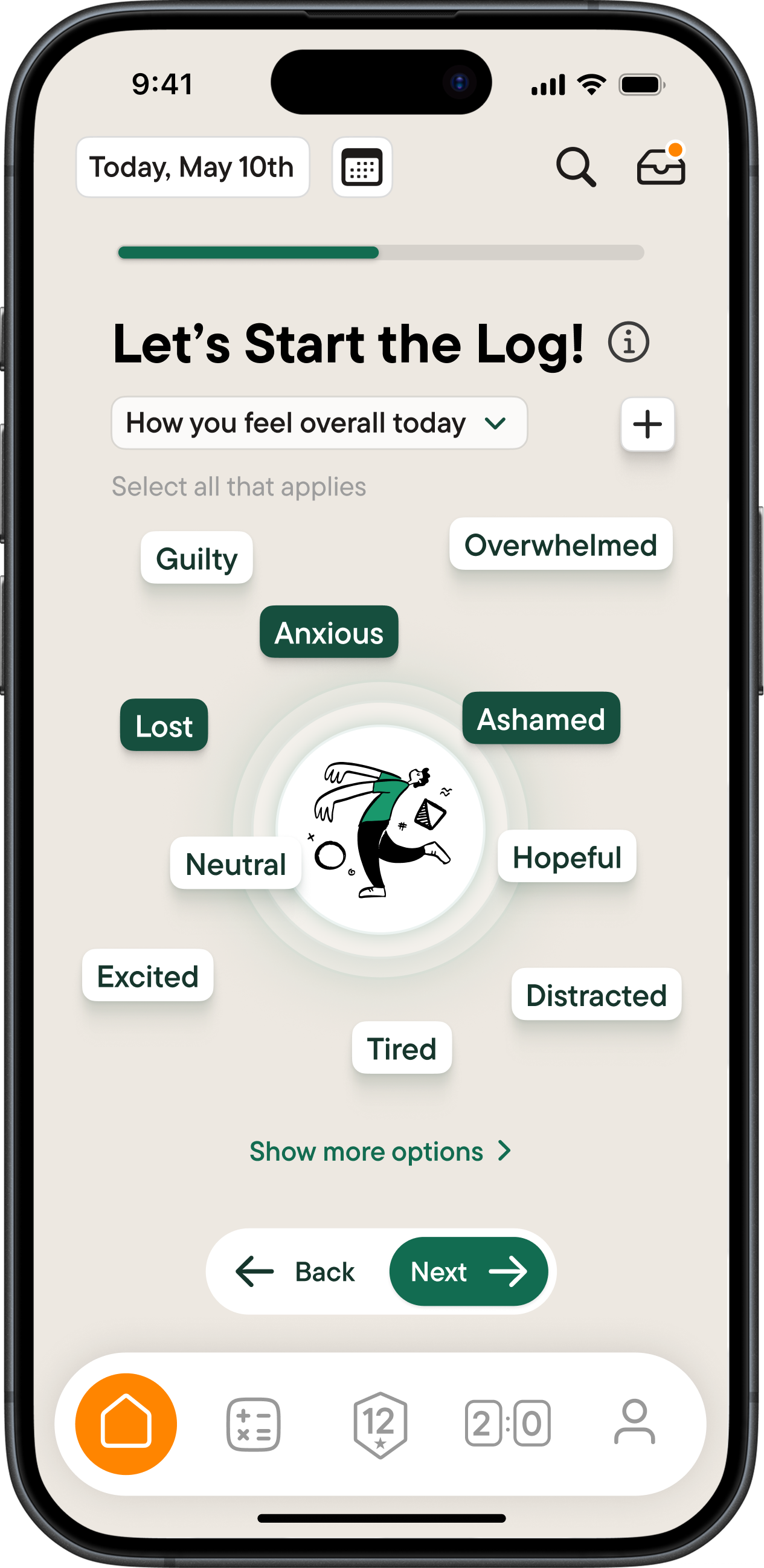
Emotion input
A quick check-in turns the urge into a named emotional state.
Feature 2
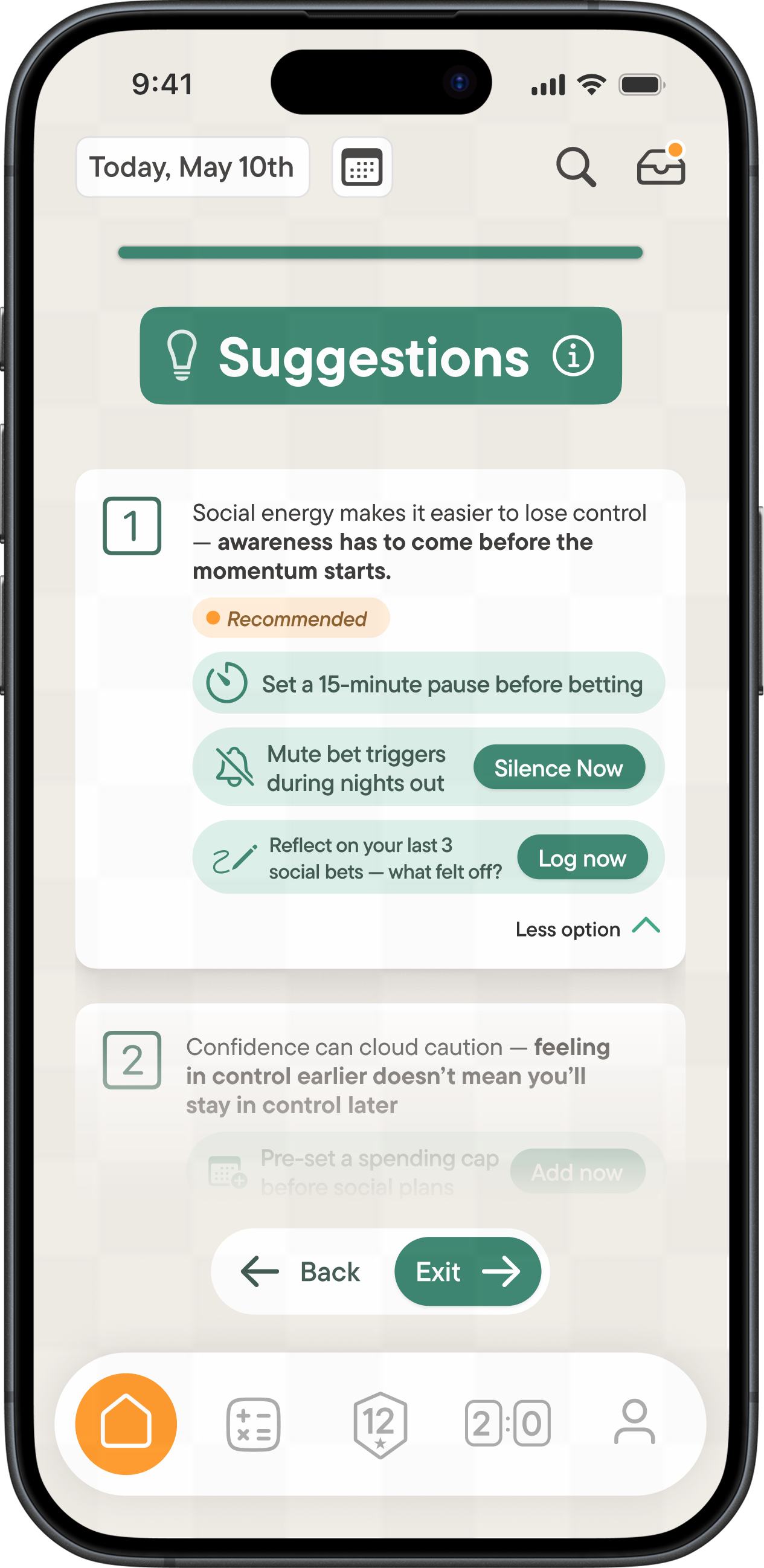
Personalized AI suggestions
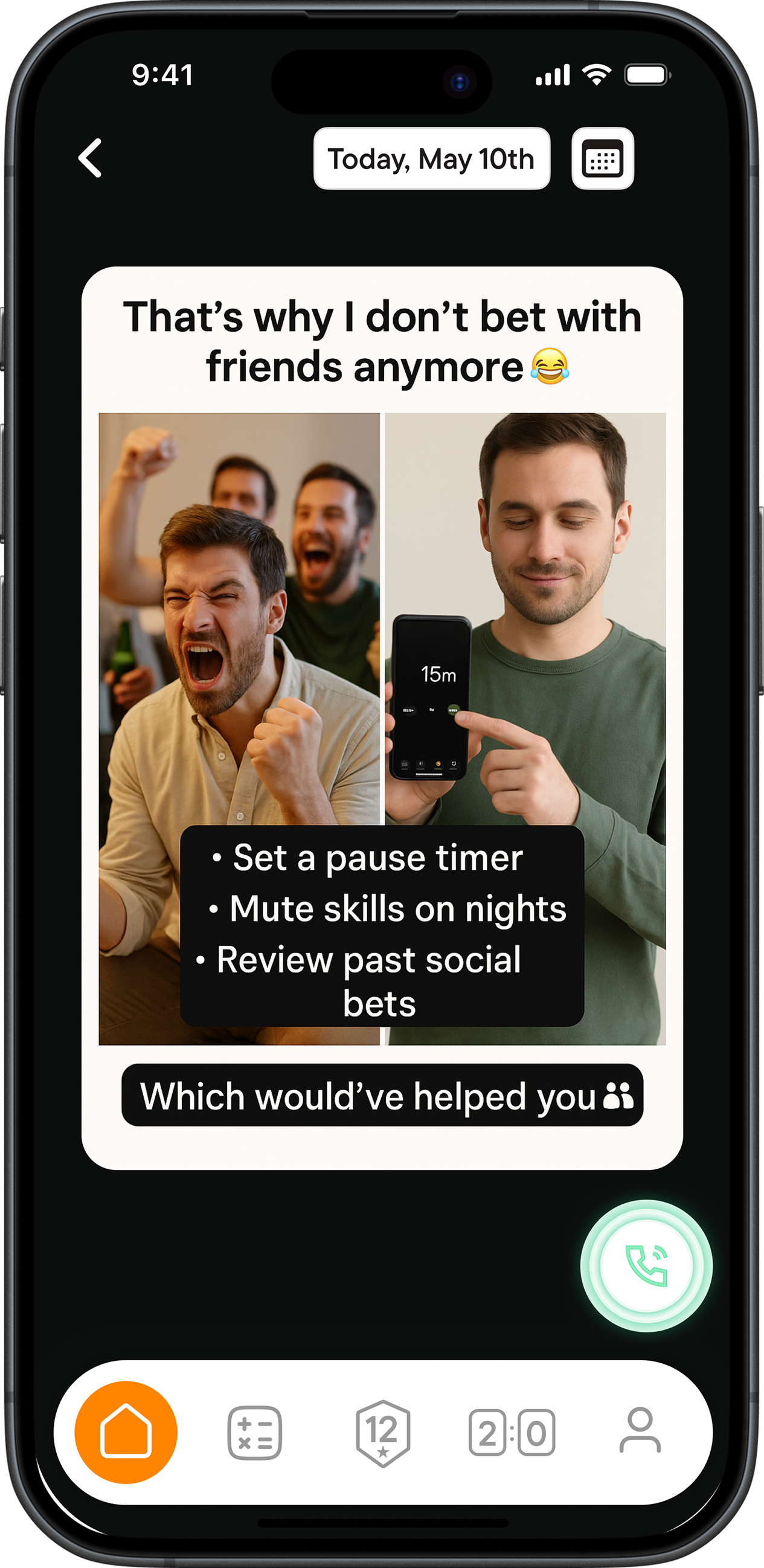
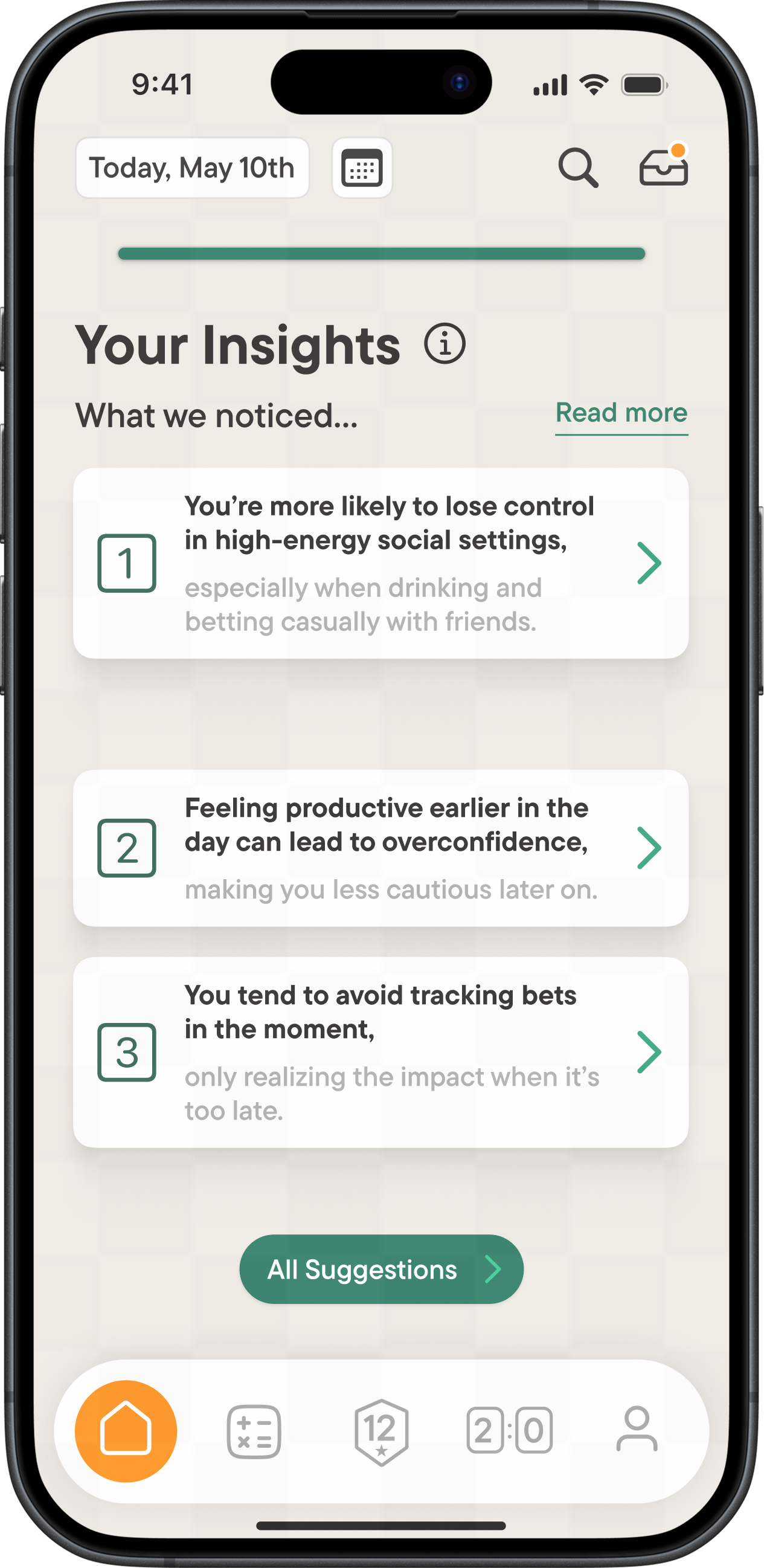
Suggestions stay tied to the current trigger: pause, mute, reflect, or reach support.
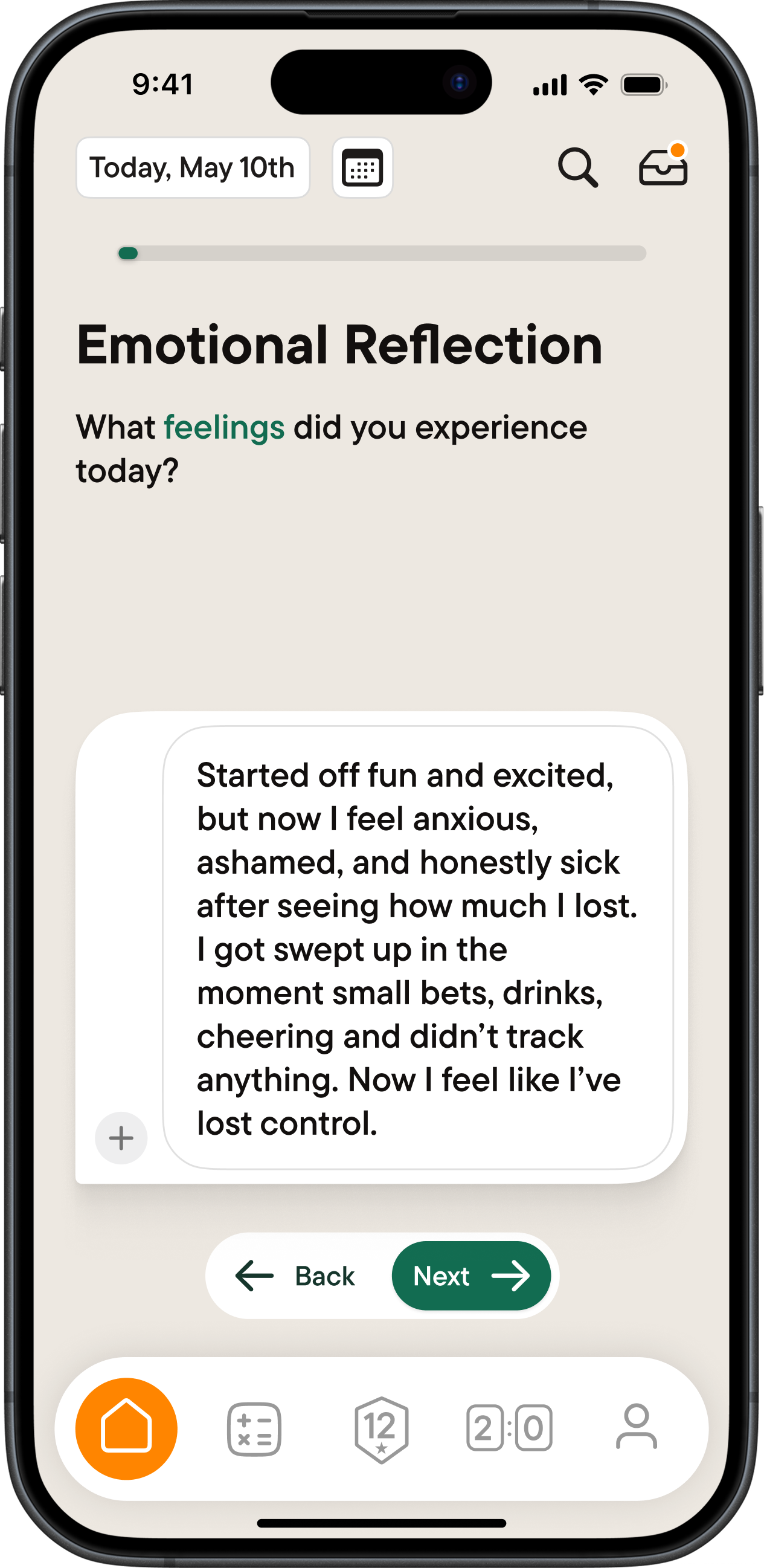
Feature 3
Emotional reflection journaling
Reflection turns each high-risk moment into pattern data for the next intervention.
Trigger flow
Emotion -> analysis -> action
01
User action
Emotion input
The user logs an emotional state in the moment.
02
Pattern recognition
AI analysis
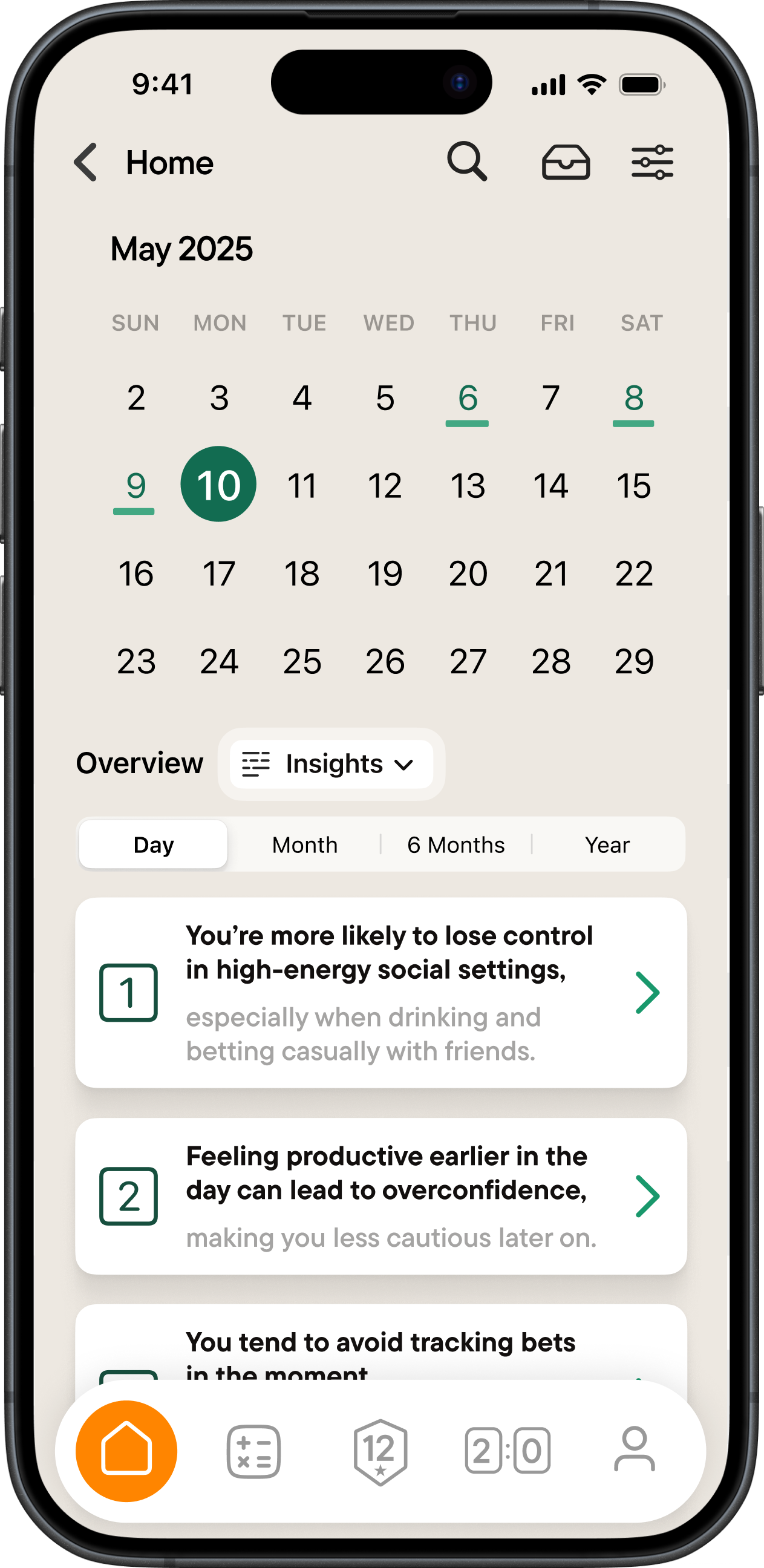
Past patterns help flag a high-risk signal, like a social betting trigger.
03
Real-time action
Intervention
The product suggests one concrete pause before the impulse acts.
Mindline does not promise control by blocking access. It creates a small pause at the moment when awareness can still change behavior.
Support surfaces
The product gives the user somewhere to go after the interruption
Outcome & reflection
Mindline shifts the paradigm from restriction to awareness. 6 research interviews surfaced trigger patterns around emotional states, social pressure, and relapse timing.
Rather than blocking access, which users bypass within minutes, it builds self-awareness, real-time emotional analysis, and proactive intervention: the foundation for sustainable behavioral change.